
Article
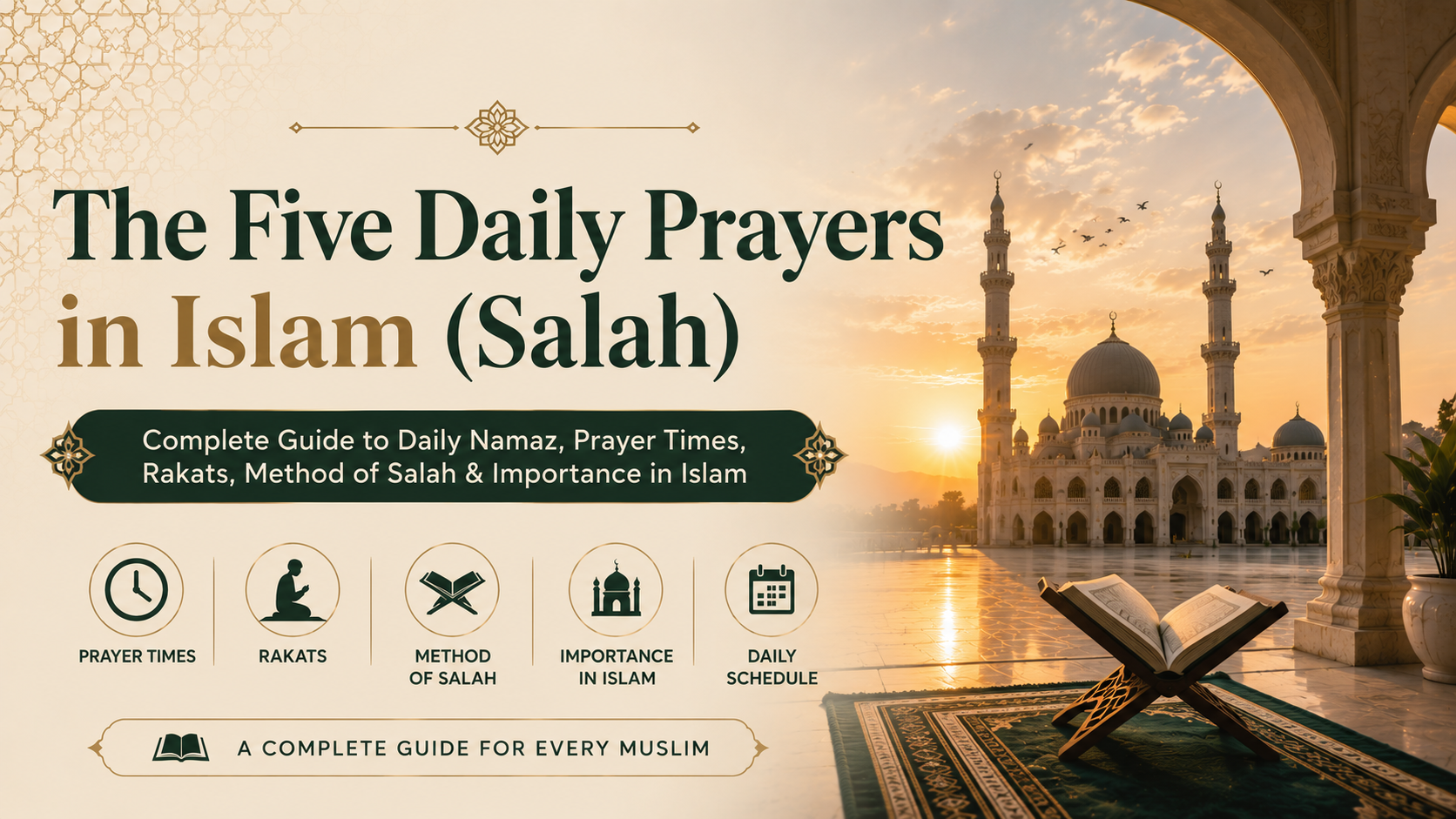
The Five Daily Prayers in Islam (Salah) – Complete Guide (Part-1)
Salah Series – S.R. No. 1
Salah Ki Ahmiyat Aur Farziyat
The Importance and Obligation of Salah (Namaz)
Salah is the second pillar of Islam and the most important act of worship after Imaan. It is the daily connection between a believer and Allah ﷻ. This section explains the fundamental importance of Salah and its obligation upon every Muslim with authentic references from the Quran and Hadith.
1 Salah Deen Ka Sutoon Hai
Salah Islam ka doosra rukn hai aur deen ka sutoon (pillar) hai. Jis tarah bagair sutoon ke imarat khadi nahi reh sakti, isi tarah bagair Salah ke deen qaim nahi reh sakta.
Allah ta'ala ka irshad hai : Aur namaz qaim karo aur zakat ada karo aur ruku karne walo ke saath ruku karo. (Sure Al-Baqarah 43)
وَأَقِيمُوا الصَّلَاةَ وَآتُوا الزَّكَاةَ وَارْكَعُوا مَعَ الرَّاكِعِينَ
عن معاذ بن جبل رضي الله عنه قال: قال رسول الله ﷺ : رَأْسُ الأَمْرِ الإِسْلاَمُ، وَعَمُودُهُ الصَّلاَةُ، وَذِرْوَةُ سَنَامِهِ الجِهَادُ.
🌍 English: Salah is the second pillar of Islam and the central pillar of the religion. The Prophet ﷺ said: "The head of the matter is Islam, its pillar is Salah, and its peak is Jihad." Just as a building cannot stand without its central pillar, Islam cannot remain firm in a person's life without the establishment of Salah.
2 Salah Mi'raj Ki Raat Tohfa Mili
Tamam ibadaat zameen par farz ki gayi, lekin Salah ek aisi ibadat hai jo Nabi e Kareem ﷺ ko Mi'raj ki raat aasmano par bula kar tofha me di gayi. Ye Salah ki azmat aur buland martabe ki daleel hai.
فُرِضَتِ الصَّلَاةُ عَلَى النَّبِيِّ ﷺ لَيْلَةَ أُسْرِيَ بِهِ خَمْسِينَ، ثُمَّ نُقِصَتْ حَتَّى جُعِلَتْ خَمْسًا، ثُمَّ نُودِيَ: يَا مُحَمَّدُ، إِنَّهُ لَا يُبَدَّلُ الْقَوْلُ لَدَيَّ، وَإِنَّ لَكَ بِهَذِهِ الْخَمْسِ خَمْسِينَ.
🌍 English: Unlike all other obligations which were revealed on earth, Salah was uniquely gifted to Prophet Muhammad ﷺ during the Night Journey (Mi'raj) above the seven heavens. Originally fifty prayers were prescribed, then reduced to five, but Allah ﷻ promised the reward of fifty prayers for performing these five. This direct gifting from above the heavens demonstrates the extraordinary status of Salah in Islam.
3 Qiyamat Ke Din Sabse Pehle Salah Ka Hisab
Qiyamat ke din bande se sabse pehle Salah ka hisab liya jaega. Agar Salah durust nikli to baqi aamal bhi durust honge, aur agar Salah me kami nikli to baqi aamal bhi qabool nahi honge.
إِنَّ أَوَّلَ مَا يُحَاسَبُ بِهِ الْعَبْدُ يَوْمَ الْقِيَامَةِ مِنْ عَمَلِهِ صَلَاتُهُ، فَإِنْ صَلَحَتْ فَقَدْ أَفْلَحَ وَأَنْجَحَ، وَإِنْ فَسَدَتْ فَقَدْ خَابَ وَخَسِرَ.
🌍 English: The Prophet ﷺ said: "The first deed for which a servant will be held accountable on the Day of Judgment is his Salah. If it is found to be sound, he will have succeeded and prospered. But if it is found to be defective, he will have failed and lost." This hadith emphasizes that Salah is the foundational measure by which all other deeds are evaluated.
4 Salah Gunaho Ko Mita Deti Hai
Salah har roz gunaho ko mitati hai. Nabi e Kareem ﷺ ne paanch waqt ki namaz ko ek behti hui nehar ke misal diya hai jisme aadmi rozana paanch baar nahata ho.
أَرَأَيْتُمْ لَوْ أَنَّ نَهْرًا بِبَابِ أَحَدِكُمْ يَغْتَسِلُ فِيهِ كُلَّ يَوْمٍ خَمْسَ مَرَّاتٍ، هَلْ يَبْقَى مِنْ دَرَنِهِ شَيْءٌ؟ قَالُوا: لَا يَبْقَى مِنْ دَرَنِهِ شَيْءٌ. قَالَ: فَذَلِكَ مَثَلُ الصَّلَوَاتِ الْخَمْسِ يَمْحُو اللَّهُ بِهِنَّ الْخَطَايَا.
🌍 English: The Prophet ﷺ illustrated the cleansing power of Salah by asking his companions: "If a river were at the door of one of you in which he bathed five times a day, would any dirt remain on him?" They replied: "No dirt would remain." He said: "That is the example of the five daily prayers — Allah uses them to wipe away sins." Each prayer purifies the soul from the spiritual impurities accumulated between prayer times.
📋 Quick Summary — SR 1: Importance of Salah
| # | Key Point | Status |
|---|---|---|
| 1 | Pillar of Islam (Sutoon-e-Deen) | ✅ ESSENTIAL |
| 2 | Gifted on Night of Mi'raj | 🌙 UNIQUE |
| 3 | First Deed Accounted on Qiyamah | ⚖️ FIRST |
| 4 | Wipes Away Sins | 💧 CLEANSING |
Salah Series – S.R. No. 2
Paanch Waqt Ki Namaz Aur Rakats Ki Tafseel
The Five Daily Prayers and Complete Rakat Breakdown
Allah ﷻ has prescribed five obligatory prayers daily at fixed times. Each prayer has Farz (obligatory), Sunnah Muakkadah (emphasized), Sunnah Ghair Muakkadah (non-emphasized), Nafl (voluntary), and Witr (necessary) rakats. This section provides the complete breakdown according to Hanafi Fiqh.
Allah ta'ala ka irshad hai : Beshak namaz momino par muqarrara waqto par farz ki gayi hai. (Sure An-Nisa 103)
إِنَّ الصَّلَاةَ كَانَتْ عَلَى الْمُؤْمِنِينَ كِتَابًا مَوْقُوتًا
1 Fajr Ki Namaz (الفجر)
Fajr ki namaz ka waqt: Subah saadiq se lekar suraj nikalne tak. Ye kul 4 rakat hai — 2 Sunnah Muakkadah aur 2 Farz.
| 🕌 2 Rakat: | Sunnah Muakkadah |
| 🕋 2 Rakat: | Farz |
| 📿 Total: | 4 Rakat |
عن عائشة رضي الله عنها قالت: لَمْ يَكُنِ النَّبِيُّ ﷺ عَلَى شَيْءٍ مِنَ النَّوَافِلِ أَشَدَّ تَعَاهُدًا مِنْهُ عَلَى رَكْعَتَيِ الْفَجْرِ.
🌍 English: Fajr is performed from dawn (Subah Saadiq) until sunrise. It consists of 4 rakats total: 2 Sunnah Muakkadah followed by 2 Farz. Aisha (RA) reported that the Prophet ﷺ never abandoned the 2 Sunnah rakats of Fajr, even during travel. This emphasized Sunnah carries immense reward and is greater than the world and what it contains.
2 Zuhr Ki Namaz (الظهر)
Zuhr ki namaz ka waqt:Suraj dhalne ke baad se lekar har cheez ka saaya uske asli saaye ke ilawa do guna hone tak.
| 🕌 4 Rakat: | Sunnah Muakkadah |
| 🕋 4 Rakat: | Farz |
| 🕌 2 Rakat: | Sunnah Muakkadah |
| ✨ 2 Rakat: | Nafl (Mustahab) |
| 📿 Total: | 12 Rakat |
عن أم حبيبة رضي الله عنها قالت: سمعت رسول الله ﷺ يقول: مَنْ صَلَّى فِي يَوْمٍ وَلَيْلَةٍ ثِنْتَيْ عَشْرَةَ رَكْعَةً بُنِيَ لَهُ بَيْتٌ فِي الْجَنَّةِ: أَرْبَعٌ قَبْلَ الظُّهْرِ وَرَكْعَتَانِ بَعْدَهَا...
🌍 English: Zuhr time begins after the sun's zenith and continues until the shadow of an object equals its length (Hanafi: twice its length). The complete prayer is 12 rakats: 4 Sunnah Muakkadah, 4 Farz, 2 Sunnah Muakkadah, and 2 Nafl. The Prophet ﷺ promised that whoever prays 12 voluntary rakats daily, including 4 before and 2 after Zuhr, Allah will build a house for them in Paradise.
3 Asr Ki Namaz (العصر)
Asr ki namaz ka waqt: Jab har cheez ka saaya uske asli saaye ke ilawa do guna ho jae tab Asr ka waqt shuru hota hai.
| 🕌 4 Rakat: | Sunnah Ghair Muakkadah |
| 🕋 4 Rakat: | Farz |
| 📿 Total: | 8 Rakat |
عن ابن عمر رضي الله عنهما عن النبي ﷺ قال: الَّذِي تَفُوتُهُ صَلَاةُ الْعَصْرِ، فَكَأَنَّمَا وُتِرَ أَهْلَهُ وَمَالَهُ.
🌍 English: Asr time starts after Zuhr ends and continues until sunset. It consists of 8 rakats: 4 Sunnah Ghair Muakkadah followed by 4 Farz. The Prophet ﷺ warned strongly: "Whoever misses the Asr prayer, it is as if he has lost his family and wealth." Missing Asr intentionally is one of the gravest sins, making timely performance critically important.
4 Maghrib Ki Namaz (المغرب)
Maghrib ki namaz ka waqt: Suraj doobne ke baad se lekar shafaq (ufuq par lalimi) ke gaayb hone tak. Ye kul 7 rakat hai.
| 🕋 3 Rakat: | Farz |
| 🕌 2 Rakat: | Sunnah Muakkadah |
| ✨ 2 Rakat: | Nafl (Mustahab) |
| 📿 Total: | 7 Rakat |
🌍 English: Maghrib time begins immediately after sunset and continues until the disappearance of the red twilight (Shafaq). It consists of 7 rakats: 3 Farz, 2 Sunnah Muakkadah, and 2 Nafl. Because the Maghrib window is short, it should be performed without delay. This is the only Farz prayer with an odd number of rakats.
5 Isha Ki Namaz (العشاء)
Isha ki namaz ka waqt: Shafaq gaayb hone ke baad se lekar subah saadiq tak. Ye kul 17 rakat hai jisme Witr bhi shamil hai.
| 🕌 4 Rakat: | Sunnah Ghair Muakkadah |
| 🕋 4 Rakat: | Farz |
| 🕌 2 Rakat: | Sunnah Muakkadah |
| ✨ 2 Rakat: | Nafl (Mustahab) |
| ⭐ 3 Rakat: | Witr Wajib |
| ✨ 2 Rakat: | Nafl (Mustahab) |
| 📿 Total: | 17 Rakat |
عن أبي هريرة رضي الله عنه قال: قال رسول الله ﷺ : إِنَّ اللَّهَ زَادَكُمْ صَلَاةً وَهِيَ الْوِتْرُ، فَصَلُّوهَا مَا بَيْنَ صَلَاةِ الْعِشَاءِ إِلَى صَلَاةِ الْفَجْرِ.
🌍 English: Isha time begins after the red twilight disappears and continues until dawn. Including Witr, Isha totals 17 rakats: 4 Sunnah Ghair Muakkadah, 4 Farz, 2 Sunnah Muakkadah, 2 Nafl, 3 Witr Wajib, and 2 Nafl. The Prophet ﷺ said: "Allah has added one more prayer for you, which is Witr — so pray it between Isha and Fajr." In Hanafi Fiqh, Witr is Wajib (necessary), not merely Sunnah.
📋 Complete Summary — SR 2: Five Daily Prayers
| Salah | Sunnah Before | Farz | Sunnah After | Nafl/Witr | Total |
|---|---|---|---|---|---|
| 🌅 Fajr | 2 (Muakkadah) | 2 | — | — | 4 |
| ☀️ Zuhr | 4 (Muakkadah) | 4 | 2 (Muakkadah) | 2 Nafl | 12 |
| 🌤️ Asr | 4 (Ghair Muakk.) | 4 | — | — | 8 |
| 🌇 Maghrib | — | 3 | 2 (Muakkadah) | 2 Nafl | 7 |
| 🌙 Isha | 4 (Ghair Muakk.) | 4 | 2 (Muakkadah) | 2+3+2 | 17 |
Salah Series – S.R. No. 3
Salah Ki Sharait Aur Faraid
Conditions and Pillars (Obligations) of Salah
Salah ke sahih hone ke liye kuch sharait poori karna zaroori hai aur kuch faraid namaz ke andar ada karne hai. In me se koi bhi kami namaz ko batil kar deti hai. This section explains the pre-conditions and internal obligations of Salah.
1 Salah Se Pehle Ki 8 Sharait
Salah shuru karne se pehle 8 sharait poori karna zaroori hai:
| 1️⃣ Taharat: | Wudu ya ghusl ke sath paak hona |
| 2️⃣ Taharat-e-Badan: | Jism najasat se paak ho |
| 3️⃣ Taharat-e-Libaas: | Kapde paak ho |
| 4️⃣ Taharat-e-Makaan: | Namaz padhne ki jagah paak ho |
| 5️⃣ Satr-e-Aurat: | Sharm wale azaa dhakkna |
| 6️⃣ Istiqbaal-e-Qiblah: | Kaabah ki taraf munh karna |
| 7️⃣ Waqt: | Sahih waqt me namaz padhna |
| 8️⃣ Niyyat: | Dil me namaz ki niyyat karna |
قال الكاساني: شرائط صحة الصلاة سبعة: الطهارة عن الحدث، والطهارة عن النجاسة في البدن والثوب والمكان، وستر العورة، واستقبال القبلة، والنية، والوقت.
🌍 English: Before starting Salah, eight conditions must be met: (1) Purity through Wudu or Ghusl, (2) Body free of impurity, (3) Clothes clean, (4) Place of prayer clean, (5) Covering the Awrah (for men: navel to knees; for women: entire body except face, hands, and feet), (6) Facing the Qiblah (Kaaba), (7) Praying within the prescribed time, and (8) Making the intention (Niyyah). If any condition is missing, the Salah is not valid.
2 Salah Ke Andar Ke 6 Faraid
Salah ke andar 6 cheeze farz hai, in me se koi cheez chhoot jae to namaz batil ho jati hai aur dobara padhna padta hai.
| 1️⃣ Takbeer-e-Tahrimah: | "Allahu Akbar" kehkar namaz shuru karna |
| 2️⃣ Qiyam: | Farz aur Wajib namaz me khade hona |
| 3️⃣ Qira'at: | Quran ki kam se kam ek aayat padhna |
| 4️⃣ Ruku: | Jhukna |
| 5️⃣ Sujood: | Har rakat me 2 sajde karna |
| 6️⃣ Qa'da Akhirah: | Aakhri rakat me Attahiyyat ke baraabar baithna |
قال الكاساني: فرائض الصلاة ستة: التحريمة، والقيام، والقراءة، والركوع، والسجود، والقعدة الأخيرة قدر التشهد.
🌍 English: Within Salah, there are six obligatory pillars: (1) Takbeer-e-Tahrimah — opening with "Allahu Akbar", (2) Qiyam — standing in Farz and Wajib prayers, (3) Qira'at — reciting at least one verse of Quran, (4) Ruku — bowing, (5) Sujood — performing two prostrations in each rakat, and (6) Qa'da Akhirah — sitting at the end for the duration of Tashahhud. If any of these is omitted, the Salah becomes void and must be repeated.
Salah Series – S.R. No. 4
Wudu Ke Faraid, Sunnahs Aur Wudu Todne Wali Cheeze
Obligations and Sunnahs of Wudu, and Things That Break Wudu
Wudu (ablution) is the spiritual and physical purification required before Salah. Without valid Wudu, Salah is not accepted. This section explains the four obligations of Wudu, its Sunnahs, and what invalidates it according to Hanafi Fiqh.
Allah ta'ala ka irshad hai : Aye eemaan walo! Jab tum namaz ke liye khade ho to apne chehre dho lo aur apne haath kohniyo tak (dho lo) aur apne saro ka masah karo aur apne paer takhno tak (dho lo). (Sure Al-Ma'idah 6)
يَا أَيُّهَا الَّذِينَ آمَنُوا إِذَا قُمْتُمْ إِلَى الصَّلَاةِ فَاغْسِلُوا وُجُوهَكُمْ وَأَيْدِيَكُمْ إِلَى الْمَرَافِقِ وَامْسَحُوا بِرُءُوسِكُمْ وَأَرْجُلَكُمْ إِلَى الْكَعْبَيْنِ
1 Wudu Ke 4 Faraid (Obligations)
Wudu me 4 cheeze farz hai, agar inme se koi ek bhi reh jae to Wudu durust nahi hoga aur namaz bhi sahih nahi hogi.
| 1️⃣ Chehra: | Maathe se thodi tak, ek kaan se doosre kaan tak dhona |
| 2️⃣ Haath: | Dono haath kohniyo samet dhona |
| 3️⃣ Masah: | Sar ke 1/4 hisse ka masah karna |
| 4️⃣ Paer: | Dono paer takhno samet dhona |
قال الكاساني: فرائض الوضوء أربعة بنص الكتاب: غسل الوجه، وغسل اليدين إلى المرفقين، ومسح الرأس، وغسل الرجلين إلى الكعبين.
🌍 English: According to Hanafi Fiqh, Wudu has four obligatory acts (Faraid) directly mentioned in the Quran: (1) washing the face from forehead to chin and ear to ear, (2) washing both arms including the elbows, (3) wiping at least one-fourth of the head with wet hands, and (4) washing both feet including the ankles. If any of these is missed, the Wudu is invalid and any prayer performed will also be invalid.
2 Wudu Ki Sunnatein
Faraid ke alawa Wudu me kuch Sunnah aamal bhi hai jinhe karne se Wudu mukammal aur kamil hoti hai:
(a) Bismillah padhna
(b) Niyat karna
(c) Miswak karna
(d) Pehle dono haath gatto (wrists) tak dhona
(e) Kulli karna (gargle)
(f) Naak me paani dalna aur saaf karna
(g) Daadhi ka khilal karna
(h) Haath aur paer ki ungliyo ka khilal karna
(i) Har azwa ko 3 baar dhona
(j) Tarteeb se Wudu karna
(k) Lagaatar (bina ruke) Wudu karna
(l) Daahini taraf se shuru karna
عن أبي هريرة رضي الله عنه قال: قال رسول الله ﷺ : لَوْلَا أَنْ أَشُقَّ عَلَى أُمَّتِي لَأَمَرْتُهُمْ بِالسِّوَاكِ عِنْدَ كُلِّ صَلَاةٍ.
🌍 English: Beyond the obligations, Wudu has many recommended Sunnah practices that complete and beautify the ablution: starting with Bismillah, making intention, using Miswak (tooth-stick), washing hands to the wrists first, rinsing the mouth and nose, running fingers through the beard, between fingers and toes, washing each part three times, maintaining proper sequence and continuity, and beginning from the right side. The Prophet ﷺ emphasized: "Had I not feared hardship upon my Ummah, I would have commanded them to use Miswak before every prayer."
3 Wudu Todne Wali Cheeze
Neeche zikr ki gayi cheeze Wudu ko tod deti hai, in me se koi cheez paayi jae to dobara Wudu karna zaroori hai:
(a) Peshab aur pakhana (urination and defecation)
(b) Hawa kharij hona (passing gas)
(c) Khoon ya peep (pus) ka jism se bahna
(d) Munh bhar ke qai aana (vomiting mouthful)
(e) Gehri neend (deep sleep) jisme jism dheela ho jae
(f) Behoshi aaye (loss of consciousness)
(g) Pagalpan ka daura (epileptic seizure)
(h)Namaz me buland awaaz se hansna (qahqaha) Hanafi fiqh ke mutabiq Wudu aur Salah dono tod deta hai.
عن أبي هريرة رضي الله عنه قال: قال رسول الله ﷺ : لَا يَقْبَلُ اللَّهُ صَلَاةَ أَحَدِكُمْ إِذَا أَحْدَثَ حَتَّى يَتَوَضَّأَ.
🌍 English: Wudu is broken by: passing urine or stool, releasing gas, flow of blood or pus from the body, vomiting a mouthful, deep sleep where the body becomes relaxed, loss of consciousness, epileptic seizure, and loud laughter during prayer (in Hanafi Fiqh). The Prophet ﷺ said: "Allah does not accept the prayer of anyone who has lost Wudu until he performs ablution again." Common misconceptions: crying, cutting hair or nails, and eating food do NOT break Wudu.
📋 Quick Summary — SR 4: Wudu Essentials
| # | Wudu Element | Status |
|---|---|---|
| 1 | Washing Face, Arms, Wiping Head, Washing Feet | ✅ FARZ |
| 2 | Bismillah, Miswak, Gargling, etc | 🌟 SUNNAH |
| 3 | Urination, Gas, Blood, Deep Sleep | ❌ BREAKS |
| 4 | Crying, Cutting Hair/Nails, Eating | ✅ NO EFFECT |
Salah Series – S.R. No. 5
Salah Ka Mukammal Tareeqa (Step-by-Step Method)
The Complete Step-by-Step Method of Performing Salah
This section provides a detailed step-by-step guide for performing Salah correctly, following the Sunnah method of the Prophet ﷺ as practiced in the Hanafi school. Each step includes the Arabic words, their meaning, and proper physical posture.
1 Niyyat Aur Takbeer-e-Tahrimah
Qiblah ki taraf munh karke khade ho, dil me namaz ki niyyat kare (zubaan se kehna zaroori nahi), phir dono haath kano tak utha kar "Allahu Akbar" kahe aur haath baandh le.
اللَّهُ أَكْبَرُ
Allahu Akbar — "Allah is the Greatest"
🌍 English: Stand facing the Qiblah (direction of Kaaba). Make the intention in your heart (verbal pronouncement is not required). Then raise both hands to the ears (men) or shoulders (women) and say "Allahu Akbar" (Allah is the Greatest). After this, men place their hands below the navel while women place their hands on the chest. The opening declaration ‘Allahu Akbar’ is known as Takbeer-e-Tahrimah.
2 Sana Padhna
Takbeer ke baad Sana padhna sunnah hai:
سُبْحَانَكَ اللَّهُمَّ وَبِحَمْدِكَ، وَتَبَارَكَ اسْمُكَ، وَتَعَالَىٰ جَدُّكَ، وَلَا إِلَٰهَ غَيْرُكَ
Translation (Urdu): Aye Allah! Tu paak hai aur tareef ke sath, Tera naam barkat wala hai, Teri shaan boland hai, aur Tere siwa koi mabood nahi.
English: "Glory be to You, O Allah, and praise be to You. Blessed is Your name, exalted is Your majesty, and there is no god worthy of worship except You."
3 Ta'awwuz Aur Tasmiyah
Sana ke baad A'oozu Billah aur Bismillah padhe:
أَعُوذُ بِاللَّهِ مِنَ الشَّيْطَانِ الرَّجِيمِ
Meaning: Mai Allah ki panaah maangta hu mardood shaitan se. (I seek refuge in Allah from the accursed Satan)
بِسْمِ اللَّهِ الرَّحْمَٰنِ الرَّحِيمِ
Meaning: Allah ke naam se shuru jo bada meherbaan nihaayat reham wala hai.
4 Surah Al-Fatihah Padhna
Phir Surah Al-Fatihah padhe — har rakat me ye padhna wajib hai:
الْحَمْدُ لِلَّهِ رَبِّ الْعَالَمِينَ الرَّحْمَٰنِ الرَّحِيمِ مَالِكِ يَوْمِ الدِّينِ إِيَّاكَ نَعْبُدُ وَإِيَّاكَ نَسْتَعِينُ اهْدِنَا الصِّرَاطَ الْمُسْتَقِيمَ صِرَاطَ الَّذِينَ أَنْعَمْتَ عَلَيْهِمْ غَيْرِ الْمَغْضُوبِ عَلَيْهِمْ وَلَا الضَّالِّينَ
آمِين
عن عبادة بن الصامت رضي الله عنه قال: قال رسول الله ﷺ : لَا صَلَاةَ لِمَنْ لَمْ يَقْرَأْ بِفَاتِحَةِ الْكِتَابِ.
5 Ruku (Bowing)
"Allahu Akbar" kehkar Ruku me jaye — peeth bilkul seedhi rahe, dono haatho se ghutno ko pakade. Phir 3 baar padhe:
سُبْحَانَ رَبِّيَ الْعَظِيمِ
3 baar: "Subhana Rabbiyal Azeem" — Paak hai mera Rab azmat wala.
English: "Glory be to my Lord, the Most Great"
6 Qaumah (Standing After Ruku)
Ruku se uthte waqt kahe "Sami'allahu Liman Hamidah" aur seedhe khade hokar kahe "Rabbana Lakal Hamd":
سَمِعَ اللَّهُ لِمَنْ حَمِدَهُ
Meaning: Allah ne sun li us shakhs ki jo us ki taareef karta hai.
رَبَّنَا لَكَ الْحَمْدُ
Meaning: Aye humare Rab! Sab tareef Tere hi liye hai.
7 Sajdah (Prostration)
"Allahu Akbar" kehkar sajde me jaye — pehle ghutne, phir haath, phir naak aur peshani zameen par rakhe. 3 baar padhe:
سُبْحَانَ رَبِّيَ الْأَعْلَى
3 baar: "Subhana Rabbiyal A'la" — Paak hai mera Rab sab se ooncha.
English: "Glory be to my Lord, the Most High"
عن أبي هريرة رضي الله عنه قال: قال رسول الله ﷺ : أَقْرَبُ مَا يَكُونُ الْعَبْدُ مِنْ رَبِّهِ وَهُوَ سَاجِدٌ، فَأَكْثِرُوا الدُّعَاءَ.
8 Jalsa Aur Doosra Sajdah
"Allahu Akbar" kehkar pehle sajde se uthe, thodi der sukoon se baithe (Jalsa), phir dobara "Allahu Akbar" kehkar doosre sajde me jaye aur wahi tasbeeh 3 baar padhe.
Jalsa me ye dua bhi padh sakte hai:
رَبِّ اغْفِرْ لِي
"Aye mere Rab! Mujhe baksh de" / "O my Lord, forgive me"
9 Attahiyyat (Tashahhud)
Doosri rakat ke doosre sajde ke baad baithe aur Attahiyyat padhe:
التَّحِيَّاتُ لِلَّهِ وَالصَّلَوَاتُ وَالطَّيِّبَاتُ، السَّلَامُ عَلَيْكَ أَيُّهَا النَّبِيُّ وَرَحْمَةُ اللَّهِ وَبَرَكَاتُهُ، السَّلَامُ عَلَيْنَا وَعَلَى عِبَادِ اللَّهِ الصَّالِحِينَ، أَشْهَدُ أَنْ لَا إِلَٰهَ إِلَّا اللَّهُ وَأَشْهَدُ أَنَّ مُحَمَّدًا عَبْدُهُ وَرَسُولُهُ
Meaning: Tamam zubani, jismani aur maali ibaadatein Allah hi ke liye hai. Aye Nabi! Aap par salaam ho aur Allah ki rehmat aur barkatein ho. Salaam ho hum par aur Allah ke nek bando par. Mai gawahi deta hu ke Allah ke siwa koi mabood nahi aur ye gawahi deta hu ke Muhammad ﷺ Allah ke bande aur uske Rasool hai.
10 Durood-e-Ibrahimi (Aakhri Rakat)
Aakhri rakat me Attahiyyat ke baad Durood-e-Ibrahimi padhe:
اللَّهُمَّ صَلِّ عَلَى مُحَمَّدٍ وَعَلَى آلِ مُحَمَّدٍ كَمَا صَلَّيْتَ عَلَى إِبْرَاهِيمَ وَعَلَى آلِ إِبْرَاهِيمَ إِنَّكَ حَمِيدٌ مَجِيدٌ اللَّهُمَّ بَارِكْ عَلَى مُحَمَّدٍ وَعَلَى آلِ مُحَمَّدٍ كَمَا بَارَكْتَ عَلَى إِبْرَاهِيمَ وَعَلَى آلِ إِبْرَاهِيمَ إِنَّكَ حَمِيدٌ مَجِيدٌ
11 Dua Padhna (Durood Ke Baad)
Durood ke baad koi bhi masnoon dua padhe, jaise:
رَبَّنَا آتِنَا فِي الدُّنْيَا حَسَنَةً وَفِي الْآخِرَةِ حَسَنَةً وَقِنَا عَذَابَ النَّارِ
Meaning: Aye humare Rab! Hume duniya me bhi bhalai de aur aakhirat me bhi bhalai de, aur hume jahannam ke azaab se bacha.
12 Salam (Ending the Prayer)
Pehle daahini taraf munh phera kar kahe, phir baayi taraf:
السَّلَامُ عَلَيْكُمْ وَرَحْمَةُ اللَّهِ
Meaning: Tum par salam ho aur Allah ki rehmat ho.
English: "Peace and Allah's mercy be upon you"
🌍 English Summary: The complete Salah follows this sequence: Intention → Takbeer-e-Tahrimah → Sana → Ta'awwuz & Tasmiyah → Surah Fatihah → Additional Surah → Ruku → Qaumah → Two Sajdahs → (Repeat for next rakats) → Attahiyyat → Durood-e-Ibrahimi → Dua → Salam to right and left. This is the Sunnah method as practiced by the Prophet ﷺ and transmitted through the Hanafi school.
Salah Series – S.R. No. 6
Witr, Sajdah Sahw Aur Aurat Ki Namaz
Witr Prayer, Sajdah Sahw (Forgetfulness Prostration), and Women's Salah
1 Witr Ki Namaz Ka Tareeqa
Witr ki namaz 3 rakat hai aur Hanafi mazhab me Wajib hai. Iska tareeqa:
1. Pehli aur doosri rakat aam namaz ki tarah padhe
2. Doosri rakat me Attahiyyat padh kar khade ho
3. Teesri rakat me Surah Fatihah aur ek Surah padhe
4. Surah ke baad "Allahu Akbar" kehkar haath kaano tak utha kar dobara baandhe
5. Dua-e-Qunoot padhe
6. Phir Ruku, Sujood karke namaz mukammal kare
Dua-e-Qunoot:
اللَّهُمَّ إِنَّا نَسْتَعِينُكَ وَنَسْتَغْفِرُكَ وَنُؤْمِنُ بِكَ وَنَتَوَكَّلُ عَلَيْكَ وَنُثْنِي عَلَيْكَ الْخَيْرَ وَنَشْكُرُكَ وَلَا نَكْفُرُكَ وَنَخْلَعُ وَنَتْرُكُ مَنْ يَفْجُرُكَ اللَّهُمَّ إِيَّاكَ نَعْبُدُ وَلَكَ نُصَلِّي وَنَسْجُدُ وَإِلَيْكَ نَسْعَى وَنَحْفِدُ وَنَرْجُو رَحْمَتَكَ وَنَخْشَى عَذَابَكَ إِنَّ عَذَابَكَ بِالْكُفَّارِ مُلْحَقٌ
🌍 English: Witr is a 3-rakat prayer, considered Wajib (necessary) in Hanafi Fiqh. It is performed after Isha. The first two rakats are like normal prayer. In the third rakat, after reciting Fatihah and another Surah, raise the hands to the ears saying "Allahu Akbar" and tie them again. Then recite Dua-e-Qunoot before going into Ruku. This supplication seeks Allah's help, forgiveness, and protection while expressing belief, trust, and gratitude.
2 Sajdah Sahw (Forgetfulness Prostration)
Agar namaz me koi wajib galti se chhoot jae ya kami ho jae to Sajdah Sahw karna wajib hai.
Sajdah Sahw Ka Tareeqa:
1. Aakhri qa'da me Attahiyyat padhe
2. Sirf daahini taraf salam phere
3. "Allahu Akbar" kehkar do sajde kare
4. Phir baithe, dobara Attahiyyat, Durood, Dua padhe
5. Dono taraf salam phere
عن ابن مسعود رضي الله عنه عن النبي ﷺ قال: إِذَا زَادَ الرَّجُلُ أَوْ نَقَصَ فِي صَلَاتِهِ فَلْيَسْجُدْ سَجْدَتَيْنِ.
🌍 English: Sajdah Sahw (forgetfulness prostration) is required when a Wajib element of Salah is unintentionally missed or delayed. Method: In the final sitting, after Tashahhud, give salam only to the right side, then perform two prostrations saying "Allahu Akbar" before each. Sit again, recite Tashahhud, Durood, and Dua, then give salam to both sides. This compensates for minor mistakes. However, if a Farz element is missed, the entire prayer must be repeated.
3 Aurat Ki Namaz Me Farq
Aurat ki namaz me mard ki namaz ke muqaable me kuch khaas farq hai:
| Action | Mard | Aurat |
|---|---|---|
| Takbeer Me Haath | Kano tak uthana | Kandho tak uthana |
| Haath Baandhna | Naaf ke neeche | Seene par |
| Ruku Me | Poori taur se jhukna | Mard ke muqable me apne jism ko zyada samet kar ruku karna. |
| Sajdah Me | Kohniyo ko zameen se door | Jism se chipka kar |
| Baithne Me | Baayan paer bichhakar daahini paer khada | Dono paer daahini taraf nikalkar baithe |
🌍 English: Women's Salah differs from men's in several aspects rooted in modesty: women raise hands only to the shoulders (not ears), place hands on the chest (not below navel), bow less deeply in Ruku, keep elbows close to body in Sajdah (not extended), and sit with both feet to the right side (rather than the man's posture). These differences emphasize concealment (Satr) and modesty which is essential in women's worship.
Salah Series – S.R. No. 7
Jama'ah, Qasr (Musafir Ki Namaz) Aur Khaas Namazein
Congregational Prayer, Traveler's Prayer, and Special Prayers
1 Jama'ah Ki Fazeelat Aur Ahmiyat
Mard ke liye paanch waqt ki namaz Masjid me Jama'ah ke sath padhna wajib hai (Hanafi mazhab me sunnah muakkadah, lekin bila uzr chhodna gunah hai).
عن ابن عمر رضي الله عنهما قال: قال رسول الله ﷺ : صَلَاةُ الْجَمَاعَةِ تَفْضُلُ صَلَاةَ الْفَذِّ بِسَبْعٍ وَعِشْرِينَ دَرَجَةً.
Jama'ah Ke Faide:
(a) 27 darje zyada sawab
(b) Muslamano me bhaichara
(c) Muqtadi Imam ki pairwi karta hai aur jama’ah me kai fiqhi sahulat milti hai.
(d) Namaz me khushu zyada
(e) Allah ki rehmat ka nuzool
🌍 English: For men, performing the five daily prayers in congregation at the Masjid is highly emphasized (Sunnah Muakkadah in Hanafi Fiqh, with abandoning it without excuse being sinful). The Prophet ﷺ said: "Prayer in congregation is 27 degrees superior to praying alone." Benefits include greater reward, fostering Muslim brotherhood, the Imam bearing certain mistakes, increased concentration, and descent of Allah's mercy.
2 Musafir Ki Namaz (Qasr)
Musafir ke liye Allah ne aasaani di hai — Wo 4 rakat wali Farz namaz (Zuhr, Asr, Isha) ko 2 rakat padhe, ye Qasr kehlata hai.
| 🌅 Fajr: | 2 Rakat (no change) |
| ☀️ Zuhr: | 4 → 2 Rakat (Qasr) |
| 🌤️ Asr: | 4 → 2 Rakat (Qasr) |
| 🌇 Maghrib: | 3 Rakat (no change) |
| 🌙 Isha: | 4 → 2 Rakat (Qasr) |
| ⭐ Witr: | 3 Rakat (no change) |
Allah ta'ala ka irshad hai: Aur jab tum zameen me safar karo to namaz me kami karne par tumhare upar koi gunah nahi. (Sure An-Nisa 101)
وَإِذَا ضَرَبْتُمْ فِي الْأَرْضِ فَلَيْسَ عَلَيْكُمْ جُنَاحٌ أَنْ تَقْصُرُوا مِنَ الصَّلَاةِ
🌍 English: Islam grants travelers ease: the four-rakat Farz prayers (Zuhr, Asr, Isha) are shortened to two rakats — called Qasr. Fajr (2), Maghrib (3), and Witr (3) remain unchanged. According to Hanafi Fiqh, Qasr applies when traveling at least 77.25 km (48 miles) from one's home with the intention to stay less than 15 days at the destination. Allah loves when His concessions are accepted, so Qasr is the recommended practice during travel.
3 Tahajjud Ki Namaz
Tahajjud raat ki ibadat hai jo neend se uth kar padhi jati hai. Ye nafl namaz me sab se afzal hai.
Allah ta'ala ka irshad hai: Aur raat ke kuch hisse me Tahajjud padho, ye aap ke liye nafil hai, ummeed hai ke aap ka Rab aap ko maqaam-e-mehmood par fayez karega. (Sure Bani Israel 79)
وَمِنَ اللَّيْلِ فَتَهَجَّدْ بِهِ نَافِلَةً لَكَ عَسَى أَنْ يَبْعَثَكَ رَبُّكَ مَقَامًا مَحْمُودًا
Tahajjud Ke Faide:
(a) Duaaein qabool hoti hai
(b) Gunaho ki maafi
(c) Dil ko sukoon
(d) Allah se qurbat
(e) Rizq me barkat
🌍 English: Tahajjud is the night prayer performed after sleeping and waking up. It is among the greatest and most virtuous voluntary prayers in Islam. The best time for Tahajjud is the last third of the night, when, as mentioned in authentic hadith, Allah ﷻ grants special mercy and acceptance to His servants and calls out:
“Who is calling upon Me so that I may answer him? Who is asking from Me so that I may give him?”
4 Taraweeh Ki Namaz
Taraweeh Ramazan ke mahine me Isha ki namaz ke baad padhi jati hai. Ye 20 rakat sunnah muakkadah hai.
عن أبي هريرة رضي الله عنه قال: قال رسول الله ﷺ : مَنْ قَامَ رَمَضَانَ إِيمَانًا وَاحْتِسَابًا غُفِرَ لَهُ مَا تَقَدَّمَ مِنْ ذَنْبِهِ.
🌍 English: Taraweeh is performed during Ramadan after Isha prayer. According to Hanafi Fiqh, it is 20 rakats and Sunnah Muakkadah. The Prophet ﷺ said: "Whoever stands in prayer during Ramadan with faith and seeking reward, his past sins are forgiven." Praying Taraweeh with the Imam until completion grants the reward of praying the entire night.
5 Janazah Ki Namaz
Janazah ki namaz farz-e-kifayah hai. Ye namaz 4 takbeero par mushtamil hai, isme ruku aur sajdah nahi hota.
Janazah Ka Tareeqa:
1. Pehli Takbeer: Sana padhe
2. Doosri Takbeer: Durood-e-Ibrahimi
3. Teesri Takbeer: Mayyat ke liye dua
4. Chauthi Takbeer: Salam phere dono taraf
🌍 English: Funeral prayer (Janazah) is Fard-e-Kifayah — obligatory on the community such that if some perform it, the obligation is lifted from all. It consists of 4 Takbeerat with no Ruku or Sujood: (1) First Takbeer with Sana, (2) Second with Durood-e-Ibrahimi, (3) Third with supplication for the deceased, (4) Fourth followed by salam to both sides. Participating carries immense reward.
🌟 Aakhri Naseehat (Final Reminder)
Salah Allah aur bande ke darmiyan rozaana ka mulaqat hai. Har Takbeer Allah ki azmat yaad dilati hai, har Ruku aajizi sikhata hai, har Sajdah ghuroor ko tod deta hai, aur har Salam aman phailata hai.
"Strictly guard your prayers" — Surah Al-Baqarah 238
"May Allah ﷻ make us among those who establish Salah with sincerity, humility, consistency, and love. May He grant us khushu in prayer and keep our hearts attached to the Masjid. Ameen."
📚 Hadith Sources Referenced
- Sahih al-Bukhari
- Sahih Muslim
- Jami' at-Tirmidhi
- Sunan Abu Dawood
- Sunan an-Nasa'i
- Sunan Ibn Majah
- Musnad Ahmad
- Bada'i' al-Sana'i (Hanafi Fiqh)
- Radd al-Muhtar (Hanafi Fiqh)
📢 If this guide benefited you, share it with family and friends so more Muslims can learn the correct method and importance of Salah.